


International Women’s Day is a moment to celebrate achievements, but also to reflect on visibility: whose work is recognised, whose voices are heard, and how the microbiology community can continue to support equitable participation across the field.
Women contribute to every area of microbiology, advancing research, driving innovation, shaping education, and translating microbial knowledge into solutions that benefit society. Yet recognition does not always keep pace with these contributions. Highlighting women in the microbiology field helps support the scientific community, inspire future women microbiologists, and builds a more inclusive and representative field.
This year, FEMS invited it’s microbiology community to nominate women whose work, leadership, mentorship, or impact deserves recognition. The response showcased an impressive diversity of inspiring scientists, educators, and advocates from Europe and beyond. From these nominations, we are pleased to highlight a select group whose contributions have been particularly noted by others in the microbiology community.
Women to watch in microbiology.
The following women were nominated by colleagues and peers across the microbiology community. Through their own words, they share insights into their work, motivations, and experiences in the field.
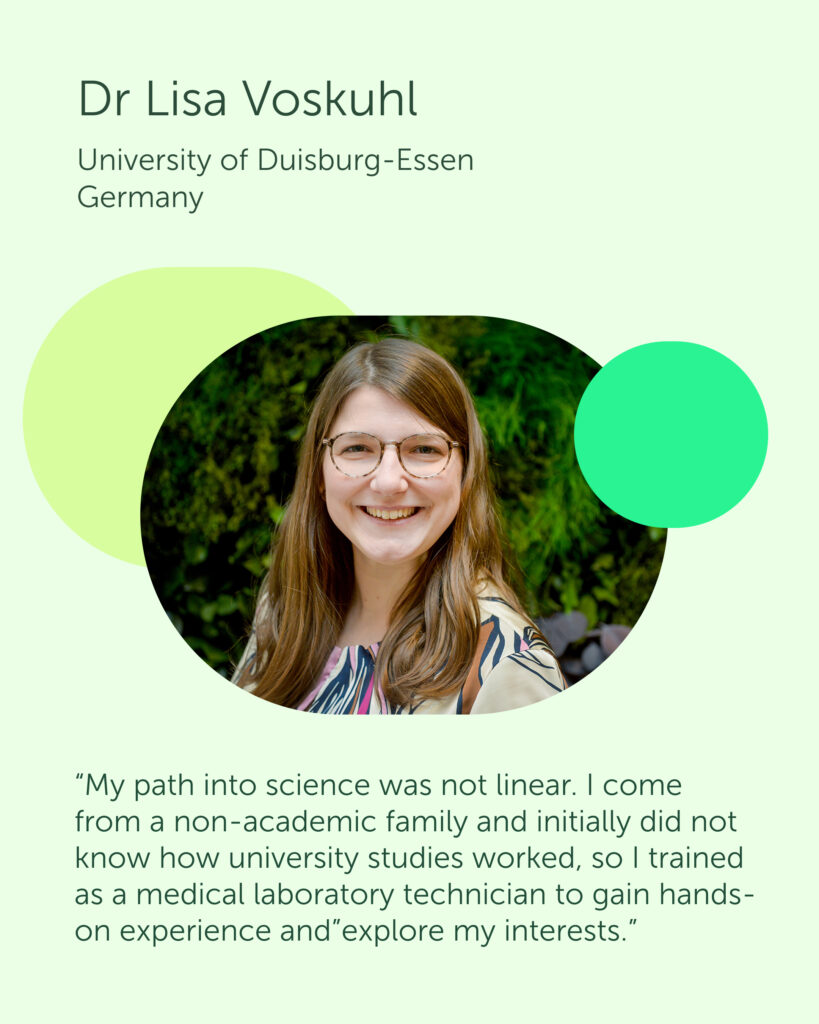
I am an environmental microbiologist and Junior Research Group Leader at the University of Duisburg-Essen, driven by curiosity about how microscopic life shapes our planet and survives under the most extreme and unusual conditions, especially at the smallest scales.
My path into science was not linear. I come from a non-academic family and initially did not know how university studies worked, so I trained as a medical laboratory technician to gain hands-on experience and explore my interests. This practical foundation gave me the confidence to pursue higher education, and I went on to study Molecular Life Science and Technical Biochemistry, gaining early international experience in industrial research and development. I worked in R&D before making the deliberate decision to leave a secure permanent position to pursue a PhD driven purely by scientific curiosity. I completed my doctorate studying microbial community assembly in naturally replicated and isolated microbiomes and transitioned directly into postdoctoral research on North Sea oil reservoir microbiology. Since February 2023, I have been leading my own junior research group.
My research focuses on the interactions between microalgae and prokaryotes, particularly within the phycosphere. I aim to understand how these microorganisms work together to adapt to and transform crude oil, other pollutants, and environmental stress. While oil pollution is often associated with large-scale disasters, hydrocarbons have naturally entered ecosystems for thousands of years through oil seeps. These long-term emissions have allowed microbial communities to evolve remarkable metabolic strategies, enabling them to survive and even thrive under other extreme conditions. By studying algal–prokaryotic consortia isolated from these natural oil habitats, my work seeks to unravel how complex microbial communities cooperate during pollutant degradation and stress and how these naturally evolved systems can inspire sustainable, and environmentally friendly solutions.
As a microbiologist, I believe that curiosity, resilience, courage, and initiative are just as important as scientific expertise. I am guided by the words of Stephanie Kwolek: “All sorts of things can happen when you’re open to new ideas and playing around with things.” and Irène Joliot-Curie: “Without the love of research, mere knowledge and intelligence cannot make a scientist.” I hope that my not-so-straight path into academia, from technical assistant to a research group leader, encourages young scientists, especially those without a family history in academia, to pursue paths in research, even when those paths require bold decisions.
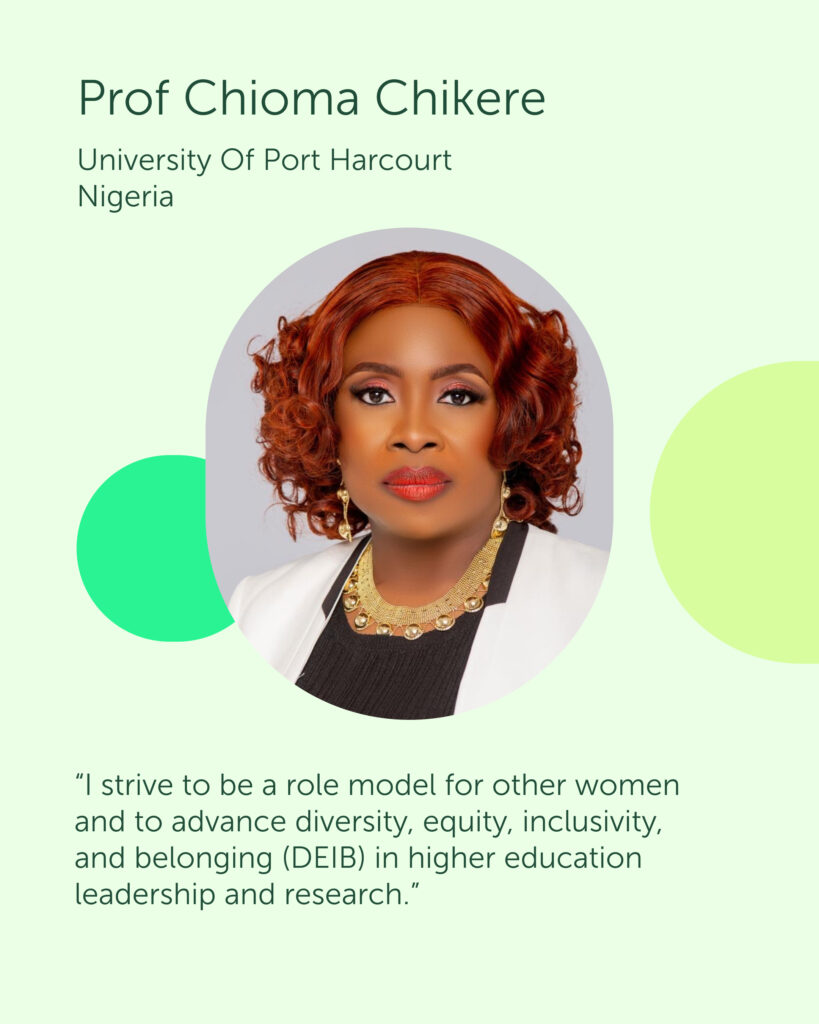 Chioma Blaise Chikere, a proudly Nigerian and internationally acclaimed scholar is a Professor of Environmental Microbiology and Biotechnology at the University of Port Harcourt (UniPort), Nigeria, where she also serves as Head, Department of Microbiology, Faculty of Science.
Her leadership extends across borders as a Professor Extraordinarius at the University of South Africa (Unisa) and a visiting professor at the World Bank Africa Centre of Excellence in Oilfield Chemicals Research (ACE-CEFOR).
Her research focuses on nature-based solutions for restoration of crude oil-impacted ecosystems using indigenous microbiomes and knowledge in line with the SDGs 13, 15. Professionally, Chikere belongs to notable global scientific organizations like full member of Applied Microbiology International (AMI), Society of Environmental Toxicology and Chemistry (SETAC) where she is a council member and social media Director for SETAC Africa geographic unit; International Society of Microbial Ecology (ISME – with headquarters in Netherlands), where she holds the position of Senior Country Ambassador representing her country Nigeria, among others.
With over 80 peer-reviewed publications, more than 80 conference presentations, and a robust portfolio of global collaborations, including the Erasmus+ AMIGO mobility agreement, Prof. Chikere is a powerhouse of innovation and impact. Her award-winning project “ECORESTORATION OF CRUDE OIL-POLLUTED SITE IN NIGER DELTA REGION, NIGERIA” under the Elsevier Foundation’s 2017 Chemistry for Climate Action Challenge restored biodiversity and ecosystem services in a heavily oil-polluted farmland in Nigeria’s Niger Delta. Read more about her project here: https://elsevierfoundation.org/gscc-5th-anniversary-interviews-with-past-winners-series-1-dr-chioma-blaise-chikere/
Prof. Chikere is a passionate advocate for the African Union Agenda 2063, women’s and girls’ empowerment, and the United Nations Sustainable Development Goals (UN SDGs), making her a quintessential role model for other women for the advancement of diversity, equity, inclusivity and belonging (DEIB) in higher education leadership and research.
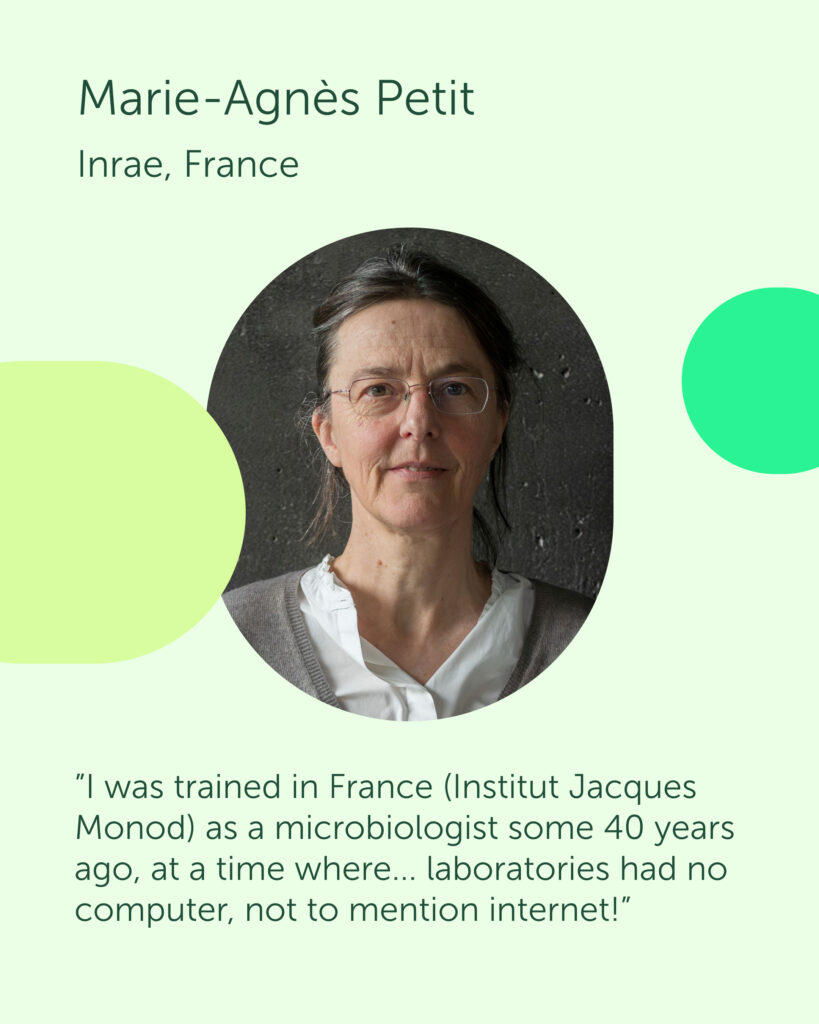
I was trained in France (Institut Jacques Monod) as a microbiologist some 40 years ago, at a time where… laboratories had no computer, not to mention internet!
My preferred field of investigation at that time was genetics and molecular biology of bacteria, with the goal to understand functions of genes involved in DNA replication and DNA recombination. This led me to decipher for instance why the DNA helicase PcrA was essential in Bacillus subtilis, as it permitted to prevent excessive homologous recombination. I then spent some time as a post-doctoral fellow in the university of California at Berkeley studying the interplay of heat shock proteins with the Pol IV repair polymerase (UmuC/D). Back in France, hired as a permanent scientist at Inrae, I started to be interested in bacteriophages, the viruses infecting bacteria, for their remarkable capacity to recombine DNA.
This led me to uncover and classify many phage recombinases (and still discovering new ones until now). At this stage of my career, I understood that combining experimental work with bioinformatics would leverage my capacity to understand bacteriophages, which were progressively coming back at the front stage, due to their interest in medicine and also agriculture, as alternatives to antibiotics. This led me to settle my own team, 16 years ago, in the Micalis department of Inrae, where by combining molecular biology, bioinformatics and ecology, we were aiming to understand to remarkable capacity of bacteriophages to evolve, acquire new genes and perform new functions.
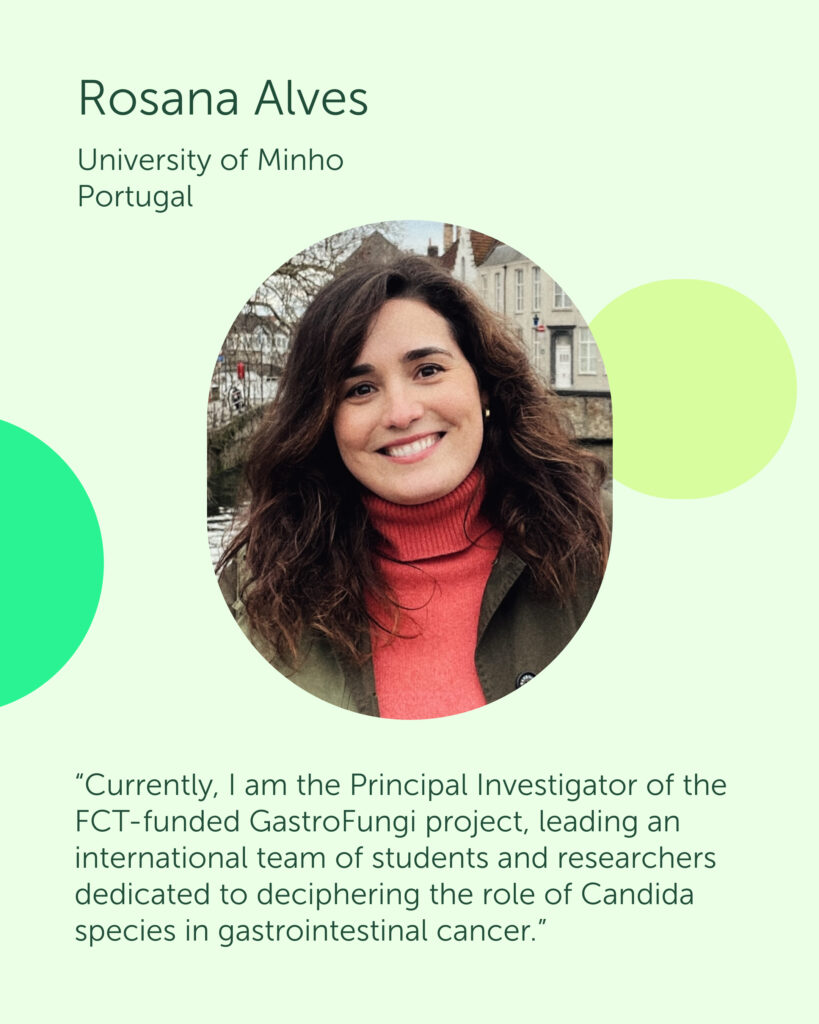 I am a Junior Researcher and Professor at University of Minho, Portugal. My research interests are focused on human fungal pathogens and genetic programs governing host-microbe interactions.
I completed my PhD in Molecular and Environmental Biology, with a specialization in Cell Biology and Heath, in 2020. During this time, I combined advanced molecular and cell biology approaches to investigate the role of carboxylate transporters in Candida pathogenesis. For my postdoctoral studies, I expanded my doctoral research by implementing murine models to study Candida infections.
Currently, I am the Principal Investigator of the FCT-funded GastroFungi project, leading an international team of students and researchers dedicated to deciphering the role of Candida species in gastrointestinal cancer.
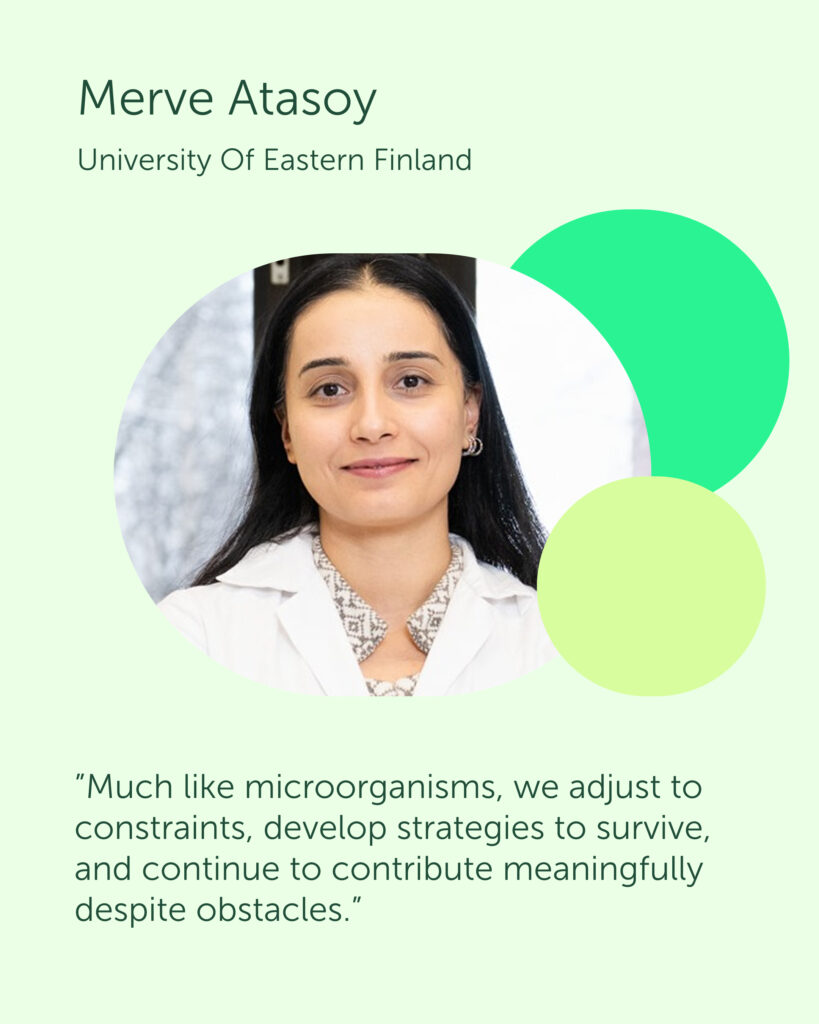 I am an environmental engineer working on resource recovery from waste streams using microorganisms. My research focuses on biological processes for wastewater treatment, which – unlike many chemical and physical approaches – are among the most environmentally friendly and sustainable solutions available.
Through these processes, pollutants are effectively removed and converted into valuable compounds by the remarkable metabolic capabilities of microorganisms.
What truly drives my work is my fascination with how microorganisms respond to their environment and interact with each other. Throughout my studies and research projects, I have been inspired by their resilience – how environmental and operational conditions shape their performance, and how stress, rather than being purely toxic, can sometimes enhance their functionality. Even under unfavorable conditions, microorganisms find ways to adapt to their metabolism, survive, and, once circumstances improve, bloom again. Watching this process has continuously shaped how I think about science, sustainability, and perseverance.
Over time, I began to see myself reflected in the systems I study. Like them, women researchers learn how to adapt, persist, and grow within demanding and often challenging patriarchal environments. Much like microorganisms, we adjust to constraints, develop strategies to survive, and continue to contribute meaningfully despite obstacles. This parallel reminds me why representation and recognition matter – and why celebrating women in science is essential for building resilient, innovative, and inclusive research communities.
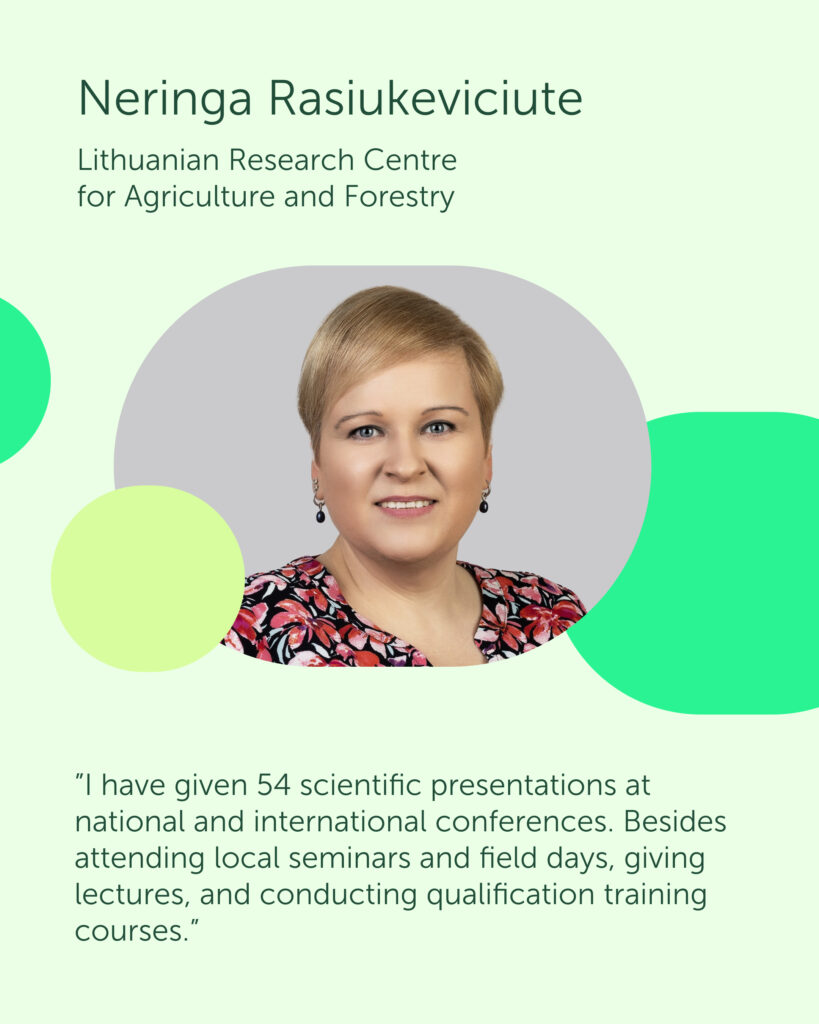
Dr. Neringa Rasiukevičiūtė (h-13) areas of expertise – plant pathology; molecular studies of pathogens; application of iMETOSsm disease forecasting; postharvest disease, apple replant diseases, pathogen interactions under LED light; biological and alternative plant protection.
Chief researcher at Laboratory of Plant Protection IH LAMMC. Obtained a bachelor’s (2009) and master’s degree (2011) in Agronomy at the Lithuanian University of Agriculture and a PhD in Agronomy at LAMMC (2016), a postdoctoral fellow at LAMMC (2017-2019).
She completed 36 fungicide biological efficiency trials according to the GEP certificate for foreign economic entities. Published 37 publications CA ISI WOS with Impact factor, 2 book chapters, 26 other peer-reviewed, 2 other, 13 recommendations, 16 popular press and co-author 2 technologies.
Visibility, community, and the future of microbiology
Recognition plays an important role in shaping scientific communities. Visible role models help early-career researchers see possible pathways, foster collaboration, and support the exchange of ideas across disciplines, sectors, and borders. Continued recognition of diverse contributions helps microbiology remain open, collaborative, and resilient as the field evolves.
International Women’s Day is one moment in an ongoing conversation about representation, opportunity, and recognition in science. Greater visibility helps build connections, encourages collaboration across the field, and can open new possibilities for microbiology’s future.
FEMS is grateful to everyone who submitted nominations and shared stories this year. These contributions help ensure that the people shaping microbiology today are seen, heard, and valued. If there are women whose work you feel deserves wider visibility, we encourage you to continue sharing these stories throughout the year.