
Journal Social Media Editors (JSMEs)
The Journal Social Media Editors are a team of active microbiology researchers working to keep our community up to date about the latest articles and collections from the FEMS Journals. The JSME team also organise around awareness days and we help them to share their science communications work. You can find their social media posts on the following accounts:
Bluesky: @femsjournals.bsky.social
Twitter: @FEMSmicro
Facebook: @FEMSmicro
LinkedIn: Federation of European Microbiological Societies
microLife journal Twitter account: @microLifeJrnl
FEMS Microbes journal Twitter account: @FEMSMicrobes
JSME Volunteers
Jakob Jung
 Journal: FEMS Microbiology Letters
Hashtag: #FEMSMicrobiolLett
Short bio: Jakob Jung completed his MSc in cellular biotechnology at Wageningen University in the Netherlands. Now he pursues a PhD at the Institute for Molecular Infection Biology (IMIB) in Würzburg, Germany. In his current research, Jakob tries to decipher the target, and off-target, effects of species-specific antibiotics using computational and next-generation sequencing approaches.
Matea Radešić
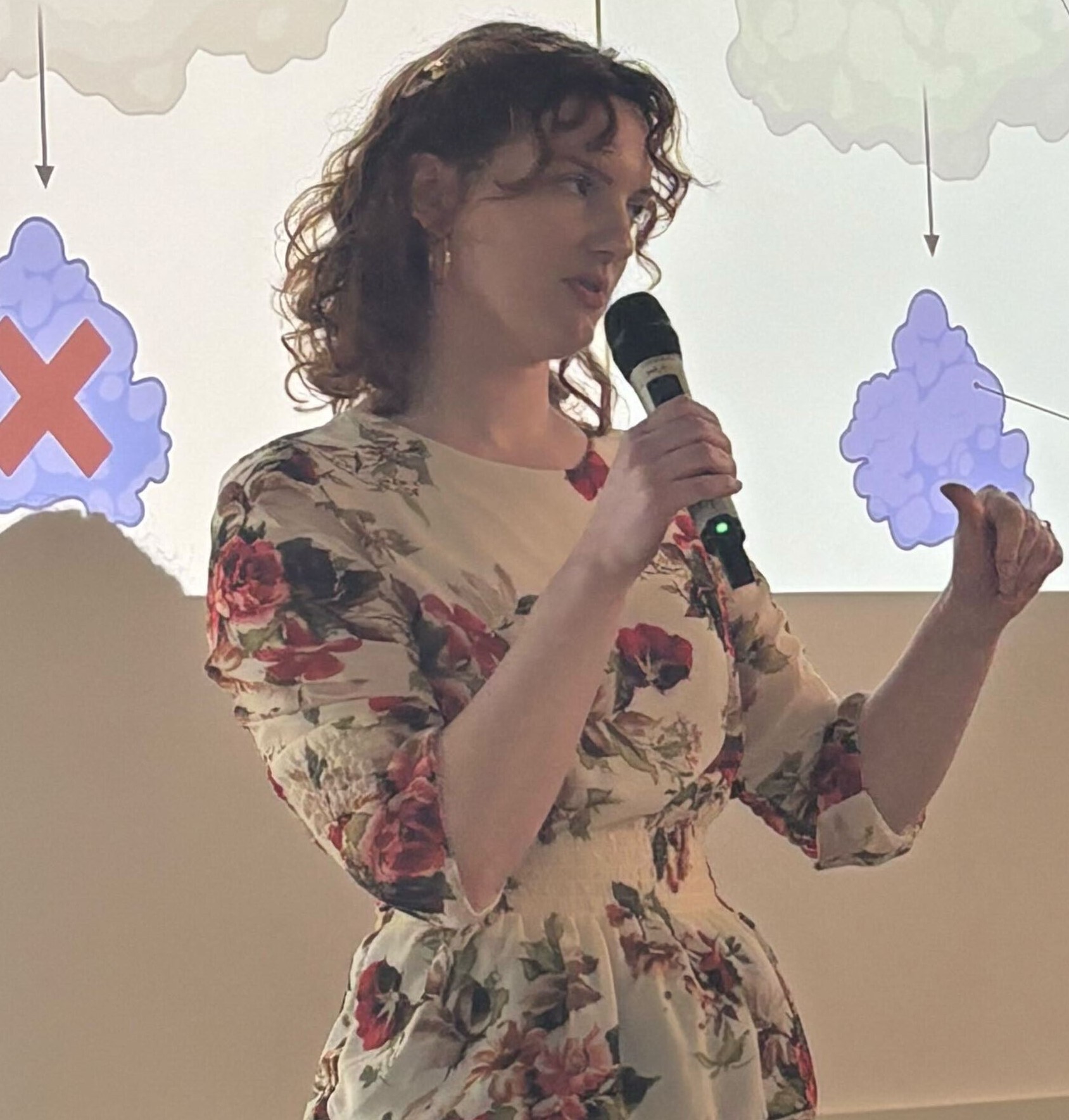
Short bio: Matea Radešić completed her MSc in Microbiology at University of Ljubljana, Slovenia. Now she is pursuing a PhD at the University of Helsinki, Finland. Her doctoral project is focusing on tRNA modifications in yeast, and developing a yeast-based cell-free system as a tool to study the modifications’ impact on translation. Moreover, she is an active science communicator in the non-profit The Science Basement..
Zehra Esra Ilhan
 Journal: FEMS Microbiology Reviews
Hashtag: #FEMSMicrobiolRev
Short bio: Esra is currently a postdoctoral researcher at INRAE, France and she completed her Ph.D. in Microbiology at Arizona State University. She has a background in environmental microbiology and roles of microbiome in female health and metabolic diseases. Her current research focuses on bi-directional interactions between microbiomes and pharmaceuticals in the context of human health.
Julie Le Bris
 Journal: microLife
Twitter account: @microLifeJrnl
Short bio: Julie Le Bris, after studying midwifery, completed her MsC in Genetics (Magistère Européen de Génétique, Paris – France) where she developed a broad interest in microbial evolution and ecology at the molecular and community levels. She is currently pursuing her PhD in the Microbial Evolutionary Genomics Unit at the Institut Pasteur (Paris – France), focusing on the bacterial capsule and horizontal gene transfers using both computational and experimental approaches.
Nurdana Orynbek
 Journal: FEMS Yeast Research
Hashtag: #FEMSYeastRes
Short bio: Nurdana Orynbek holds a Bachelor’s degree in Life Sciences with a major in Chemistry and Biology from the Université de Strasbourg, France. She completed an Erasmus Mundus Joint Master’s degree in Biological and Chemical Engineering for Sustainable Bioeconomy at the universities of Reims Champagne-Ardenne, AgroParisTech (France), and Liège (Belgium). Her research focused on yeast-based biotechnological production of aroma compounds from agro-industrial residues. She conducted her Master’s thesis at the University of Natural Resources and Life Sciences (BOKU) in Vienna, investigating microbial strategies for acetate production from industrial by-products with potential for CO₂ fixation. Currently, she is a PhD researcher at the Technical University of Vienna, working on microbial lipid production for sustainable industrial applications.
Manasa Narayan
 Journal: FEMS Microbes
Twitter account: @FEMSMicrobes
Short bio: Manasa completed her MSc. in Biochemistry at the University of Hyderabad in India. Her master’s research on Mycobacterium tuberculosis sparked her interest in bacterial pathogens. Subsequently, she moved to Germany to pursue a PhD at the Institute for Molecular Infection Biology in Würzburg. Manasa’s PhD research focuses on functional characterization of RNA-binding proteins in the food-borne pathogen Campylobacter jejuni.
Open access is key to supporting the FEMS mission of disseminating high quality research as widely as possible: when high quality, peer reviewed sound science is open access, anyone, anywhere in the world with an internet connection, can read it. All but one of the not-for-profit FEMS journals are fully open access (OA), with one journal, FEMS Microbiology Letters, offering free-to-publish and OA options.