

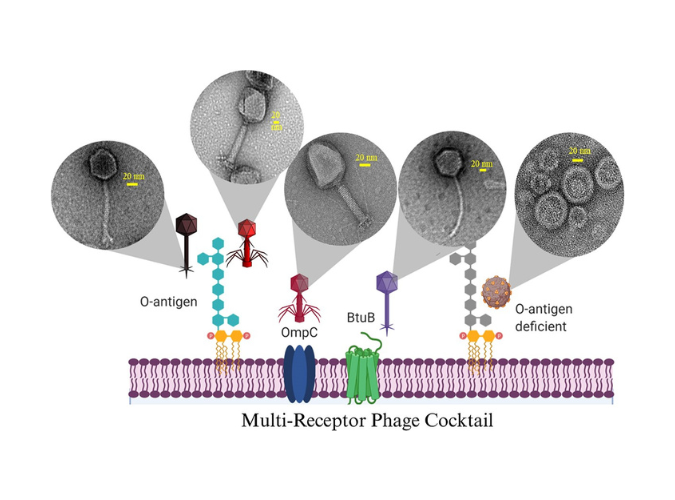
Multireceptor phage cocktail against Salmonella enterica to circumvent phage resistance
Carlos E Martinez-Soto and others
microLife, Volume 5, 2024, uqae003, https://doi.org/10.1093/femsml/uqae003
Bacteriophages are emerging as promising alternatives to conventional antimicrobials, but their successful application depends on overcoming challenges such as bacterial resistance, effective cocktail design, and real-world implementation. This curated collection brings together recent Open Access research on phage therapy, phage resistance, antiphage defence, cocktail design, and applications in clinical and food microbiology.


Carlos E Martinez-Soto and others
microLife, Volume 5, 2024, uqae003, https://doi.org/10.1093/femsml/uqae003
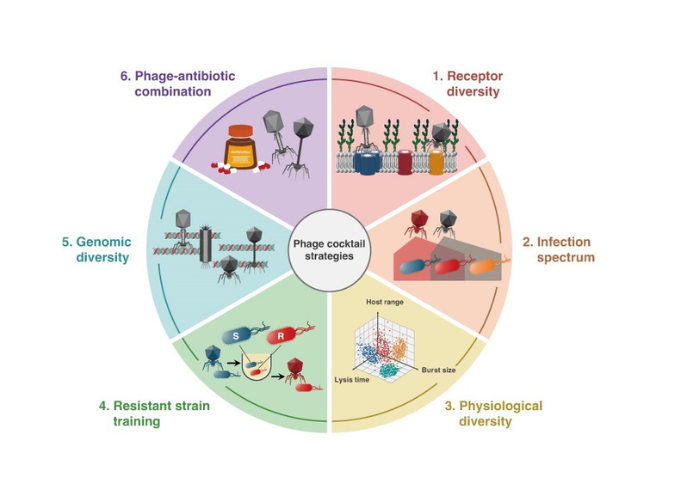
Tomoyoshi Kaneko and others
FEMS Microbiology Reviews, Volume 50, 2026, fuaf061, https://doi.org/10.1093/femsre/fuaf061
This comprehensive review systematically examines cutting-edge design principles for phage cocktails, focusing on strategies to prevent antimicrobial resistance through receptor diversity, phage-antibiotic combinations, and network-based approaches.
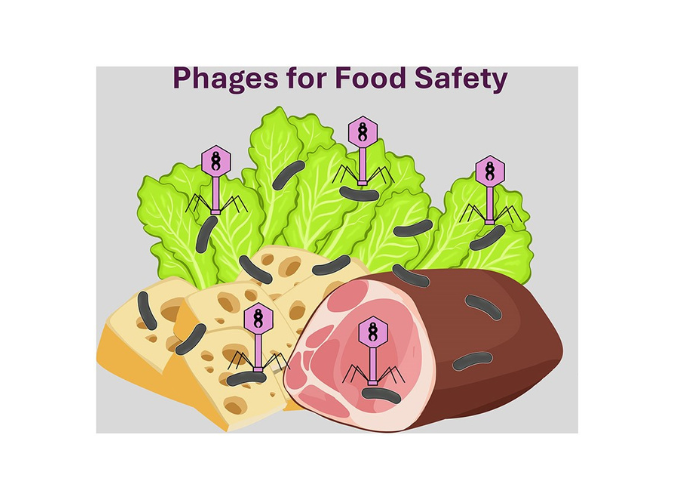
Angelika Roth and others
FEMS Microbiology Reviews, Volume 50, 2026, fuag002, https://doi.org/10.1093/femsre/fuag002
Bacteriophages can be used as antimicrobial agents and contribute to food safety; however, their range of application and effectiveness are limited, their regulatory classification is not yet conclusively clarified, and certain safety aspects are still debated.
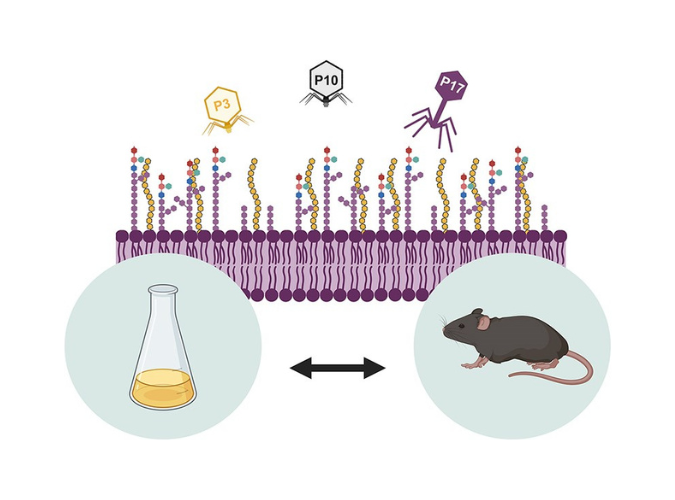
Luís Leónidas Cardoso and others
microLife, Volume 6, 2025, uqaf017, https://doi.org/10.1093/femsml/uqaf017
Bacteriophages offer a promising alternative to antibiotics. However, bacteria can develop resistance to phages, potentially limiting treatment success. This study examines how such resistance emerges and what it costs bacteria, using a clinically important E. coli strain and a tailored phage cocktail. Under nutrient-rich lab conditions, phage resistance had a relatively low cost. But in the gut of mice, resistant bacteria paid a high price due to changes in their cell surface. These findings highlight the importance of testing phage therapies in realistic conditions, as results can vary significantly depending on the environment.
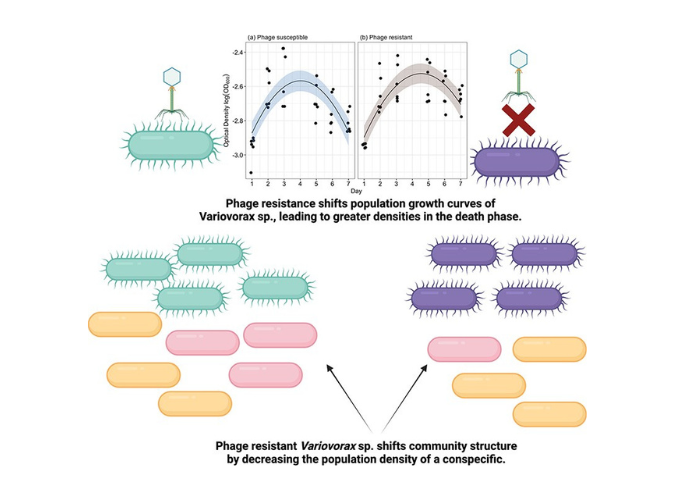
Meaghan Castledine and others
FEMS Microbiology Ecology, Volume 101, Issue 4, April 2025, fiaf027, https://doi.org/10.1093/femsec/fiaf027
Microbial community structure is affected by phage resistance evolution in Variovorax, which increases host density. Created in BioRender. Castledine, M. (2025) https://BioRender.com/q92i397
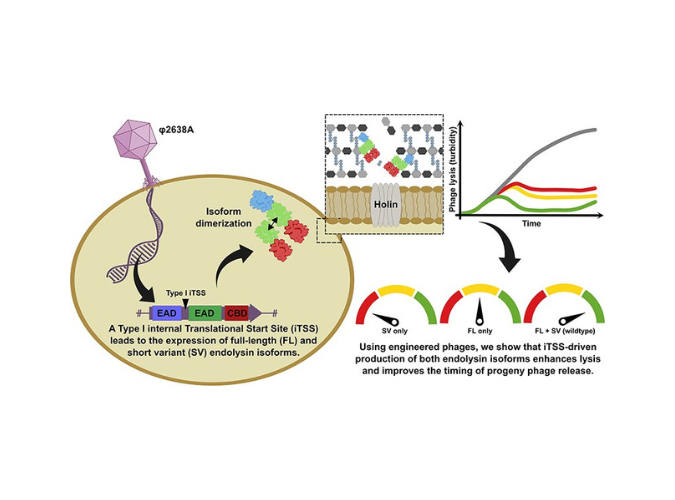
Léa V Zinsli and others
microLife, Volume 6, 2025, uqaf011,
https://doi.org/10.1093/femsml/uqaf011
Phage φ2638A co-expresses a short variant endolysin from an internal translational start site (iTSS), which heterodimerizes with the full-length isoform. This interaction enhances bacterial cell lysis and phage progeny release, providing a functional explanation for the conservation of iTSSs across diverse phage genomes.
Publishing with FEMS Journals means contributing to a publishing model that prioritizes the scientific community over profit. This community-first approach translates into our publishing practices; we offer rigorous and constructive peer review, and author-friendly and accessible publishing policies.

Reading list for viruses of microbes reading list
Open access is key to supporting the FEMS mission of disseminating high quality research as widely as possible: when high quality, peer reviewed sound science is open access, anyone, anywhere in the world with an internet connection, can read it. All but one of the not-for-profit FEMS journals are fully open access (OA), with one journal, FEMS Microbiology Letters, offering free-to-publish and OA options.