
EAM Summit 2026
7-9 October, Parador de La Granja (Spain)
Welcome
Dear Fellow,
On behalf of the European Academy of Microbiology, it is my great pleasure to welcome you to the EAM Summit 2026.
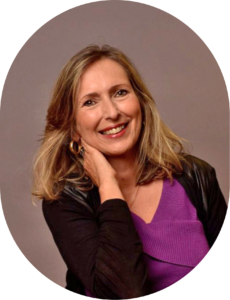 As the Fellowship continues to grow, this meeting offers an important opportunity to share perspectives, strengthen collaboration across disciplines and countries, and help shape EAM’s future direction.
As an EAM Fellow, you are part of a community that values scientific excellence, dialogue, collaboration, mentorship, and thought leadership. We hope you will find the Summit a rewarding space to strengthen our Fellowship of eminent scholars.
I look forward to meeting you in person and to the conversations that will help guide the EAM’s next chapter.
President, European Academy of Microbiology
Schedule at a glance
Summit speakers
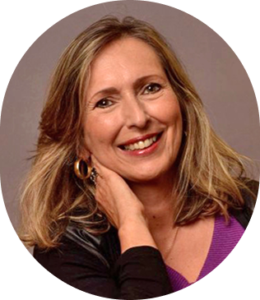
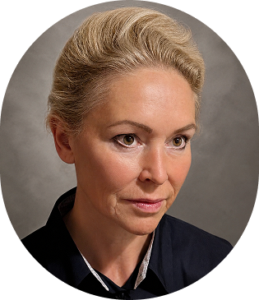 Rachel Armstrong is Professor of Design-driven Construction for Regenerative Architecture at KU Leuven. Her work develops interfaces between architecture and microbiology, exploring how living systems reshape design and construction practices. Through interdisciplinary partnerships, she creates social and spatial encounters with the invisible microbial realm, translating biological processes into architectural innovation. Her research builds bridges between the built environment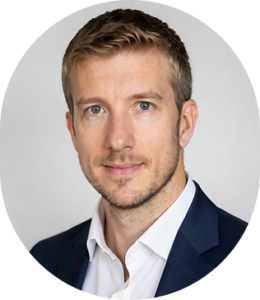
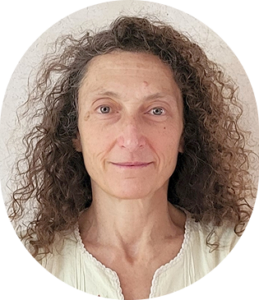
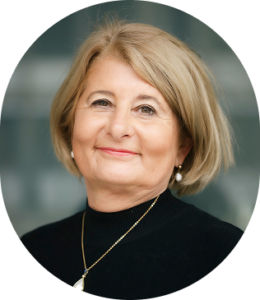 Nina Gunde-Cimerman is Professor of Microbiology at the University of Ljubljana, Slovenia. Her research explores extremophilic and extremotolerant fungi, from hypersaline and polar environments to the human-made technosphere. Her work has helped establish fungi as important models for understanding adaptation to low water activity and multiple extremes. She is an elected member of the European Academy of Microbiology and EMBO and editor of The Mycota: Extremophilic and Extremotolerant Fungi.
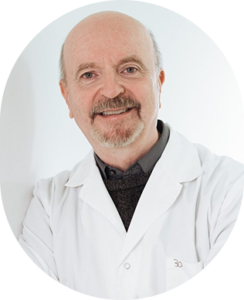 Víctor de Lorenzo is a Research Professor at the Spanish National Research Council (CSIC), where he leads the Environmental Molecular Microbiology Laboratory at the National Center for Biotechnology in Madrid. His research focuses on the biology and biotechnological potential of environmental bacteria, particularly Pseudomonas putida, for bioremediation and industrial applications. He has pioneered genetic tools for programming microbes as catalysts and now explores the interface between synthetic biology and environmental microbiology. His honours include the Rey Jaime I Award, the ASM GSK International Award and a Grand Prix from the French Academy of Sciences.
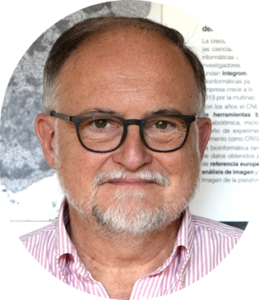 After getting a PhD in Biology (Complutense U. and CIB-CSIC, Madrid, 1991), Rafael Giraldo took up a postdoc (EMBO-LTF and MRC staff) at the MRC Laboratory of Molecular Biology (Cambridge, UK, 1992-94). Then he was hired by the Ministerio de Educación y Ciencia (MEC) from 1995-99 at CIB-CSIC, where he later became Senior Staff Scientist (2000), Scientific Researcher (2008) and Research Professor (2010). Rafael has been at the Spanish National Centre for Biotechnology (CNB-CSIC) since 2019.
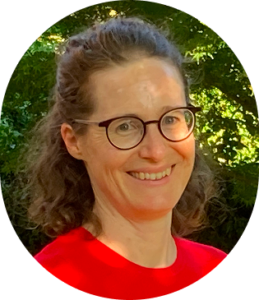 Sophie Martin’s work has made key contributions in the fields of cell size control, cell polarization and cell fusion, using the fission yeast as fungal model. She started her lab in 2007 at the University of Lausanne. Since 2023, she is a full professor at the University of Geneva. Her work has been recognized by several awards, including the EMBO Gold medal, EMBO membership, and consecutive ERC grants.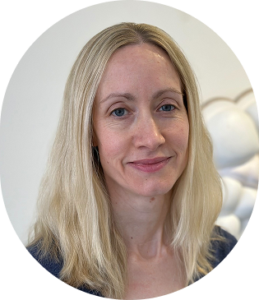
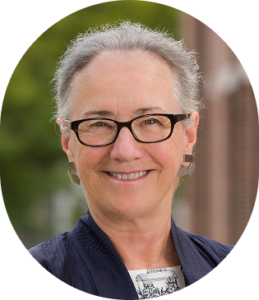 Dr. McFall-Ngai, a staff scientist at Carnegie Science and a Faculty Associate at California Institute of Technology, has been a leader in establishing the squid-vibrio model of animal-bacterial symbioses. She is heavily involved in promoting microbiology as the cornerstone of biological sciences. She holds Honoris Causa (honorary PhD) positions at EPFL, Switzerland, University Claude Bernard, France, and University of Kiel, Germany. She is a member of the American Academy of Arts and Sciences (2011), US National Academy of Sciences (2014), American Academy of Microbiology (2002), and European Academy for Microbiology (2026).
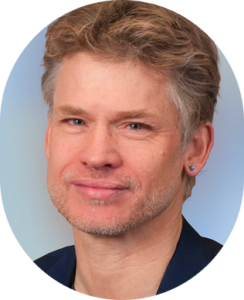 Professor Jay Hinton is Professor of Microbial Pathogenesis at the University of Liverpool and a member of the European Academy of Microbiology Steering Committee. His research investigates how bacterial pathogens cause disease, with a particular focus on Salmonella. He pioneered approaches for capturing bacterial gene expression during infection and has advanced understanding of gene regulation, non-coding RNAs and pathogen evolution. His laboratory now combines transcriptomics, functional genomics and experimental evolution to study invasive African Salmonella pathovariants. This work aims to reveal the genetic basis of bacterial disease and support the development of new antibiotics and vaccines.
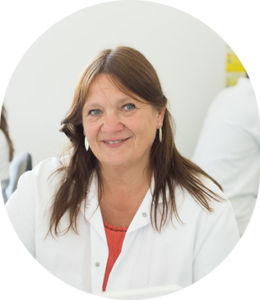 Currently holding the position of Professor of exceptional class, and Head of Unit Biology of Intracellular Bacteria at the Institut Pasteur, Prof. Buchrieser has dedicated her career to unraveling the complexities of bacterial diseases. With a PhD from the University of Salzburg, Austria, and postdoctoral training in the United States and France, she has been at the forefront of research into intracellular bacteria, particularly focusing on Legionella. Her work investigates the genetic factors that confer bacterial virulence, mechanisms of pathogen evolution, and the interaction between pathogens and host functions—earning her international acclaim. Carmen Buchrieser was the recipient of the prestigious FEMS-Lwoff Award for Achievements in Microbiology 2025.
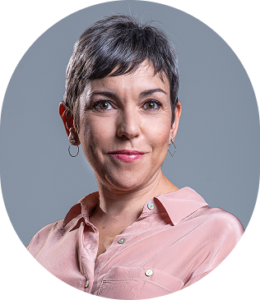 Pampa García Molina (Madrid, 1976) is a science journalist. She holds a degree in Physics from the Complutense University of Madrid and a Master’s degree in Science Journalism from the Carlos III University of Madrid. She has been working at FECYT since 2011, where she has headed the Science Media Centre Spain since March 2022. Until then, she was editor-in-chief of SINC, the first nationwide public agency specialising in science news in Spanish, licensed under a Creative Commons license. She is vice-president of the Spanish Association for Science Communication.
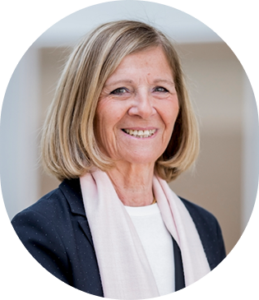 Since 1986, Pascale Cossart has investigated how bacterial pathogens interact with mammalian cells during infection. She has pioneered and documented in detail how bacteria use a multitude of complementary strategies – including posttranslational modifications, epigenetic modifications and innate immunity mechanisms – to enter into non-phagocytic cells and multiply therein, move intra-and intercellularly, and counteract the arsenal of host cell defenses. Her seminal investigations on the bacterial pathogen Listeria monocytogenes – that she has raised as a model and is one of the best studied intracellular pathogens – have paved the way for laboratories studying bacterial infectious diseases throughout the world.
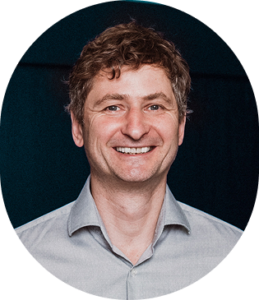 Prof. Jörg Vogel is the founding director of the Helmholtz Institute for RNA-based Infection Research (HIRI) as well as the director of the Institute of Molecular Infection Biology (IMIB) at the University of Würzburg, Germany. As world-leading scientist in the field of RNA biology, Jörg Vogel is considered a pioneer in the application and development of high-throughput sequencing methods for the analysis of individual infected cells as well as interactions between pathogenic bacteria and their hosts.
General information
Venue information
The EAM Summit 2026 will take place at Parador de La Granja, located in La Granja de San Ildefonso, near Segovia, Spain. The venue combines contemporary comfort with historic architecture and is housed within the Casa de los Infantes, an 18th-century building commissioned by King Carlos III.
All attending Fellows will be accommodated at Parador de La Granja, allowing you to stay on-site throughout the event and making it easy to move between sessions, networking activities, and social programme elements.
Shuttle information
Parador de la Granja is easily accessible from Madrid by road. To make your journey as smooth as possible, FEMS has arranged complimentary shuttle buses between Adolfo Suárez Madrid-Barajas Airport (MAD) and Parador de la Granja.
Wednesday 7 October
- Shuttle departing Terminal 1 (T1) at 13:30
- Shuttle departing Terminal 1 (T1) at 14:30
- Shuttle departing Terminal 1 (T1) at 16:15
All shuttles will collect guests from Terminal 1 (T1) and then Terminal 4 (T4) of Adolfo Suárez Madrid-Barajas Airport (MAD) before continuing to Parador de La Granja.
Friday 9 October
- Shuttles departing Parador de La Granja at 13:00
- Shuttles departing Parador de La Granja at 14:30
All shuttles will depart from Parador de La Granja and make stops at Terminal 1 (T1) and then Terminal 4 (T4) at Adolfo Suárez Madrid-Barajas Airport (MAD).
A few days before the event, all attendees will receive an email with their respective shuttle details, including assigned departure time, pick-up location, and any other relevant instructions. Please note that shuttle arrangements are based on the travel information provided during registration and the online form.
If you miss your assigned shuttle or are travelling outside the scheduled shuttle times, please check the transport recommendations below for arranging your own transportation to Parador de La Granja.
Arranging your own transportation
For those who prefer to make their own travel arrangements, please use the address below. Parador de La Granja is located approximately 90 km from Adolfo Suárez Madrid-Barajas Airport (MAD). The journey takes approximately 60 to 90 minutes by car, depending on traffic conditions.
Venue address
Parador de La Granja
Calle de los Infantes, 3
40100 Real Sitio de San Ildefonso (Segovia), Spain
Google Maps: https://maps.app.goo.gl/89g7g59tEH5LNjiV8
What3words: penning.challenger.blossoming
Taxi
Official airport taxis are available 24 hours a day from designated taxi ranks outside the arrivals halls and do not require advance booking.
To reach the taxi area:
- Follow the signs for “Taxi” after collecting your luggage
- Taxi ranks are located outside Terminals 1, 2, and 4
Official Madrid taxis are white with a red diagonal stripe and are licensed and regulated.
Pre-bookable transportation services
The following services offer advance booking options:
Ride-hailing services
Ride-hailing services such as Uber, Cabify and Bolt are available in Spain.
Pickup locations are situated in designated areas rather than where the taxis are located:
- Terminal 1: P1 car park
- Terminal 2: Express car park T2
- Terminal 4: P4 car park. Module D, Floor 4
To find the location in each terminal, please check the airport interactive map.
The exact pickup location should be provided in the app once your booking is confirmed. We recommend reviewing the pickup instructions carefully upon arrival at the airport.
Important information
For your safety, please use only official taxi ranks or licensed ride-hailing services. Do not accept transportation offers from individuals approaching you inside the terminal or arrivals hall. FEMS does not cover the cost of taxis to and from the venue.
Photography and video notice
FEMS will be using a professional photographer and is organising a videographer for some prearranged interviews with Fellows at the EAM Summit. These media are owned by FEMS and may be used for internal and external communication, such as websites and social media, by the EAM and FEMS. By registering for the EAM Summit you consent to such uses unless you notify us in writing.
Open access is key to supporting the FEMS mission of disseminating high quality research as widely as possible: when high quality, peer reviewed sound science is open access, anyone, anywhere in the world with an internet connection, can read it. All but one of the not-for-profit FEMS journals are fully open access (OA), with one journal, FEMS Microbiology Letters, offering free-to-publish and OA options.