

Small proteins in Prokaryotes Reading list

In the past, small proteins were frequently overlooked due to technical and methodological challenges. However, recent advancements and evidence reveal that a huge number of small proteins with diverse functions exist across all domains of life. This thematic issue brings together new findings and broadens our understanding of the various mechanisms and functional roles of small proteins in prokaryotes.

Functional characterization of the DUF1127-containing small protein YjiS of Salmonella Typhimurium

Elisa Venturini and others

microLife, Volume 6, 2025, uqae026, https://doi.org/10.1093/femsml/uqae026

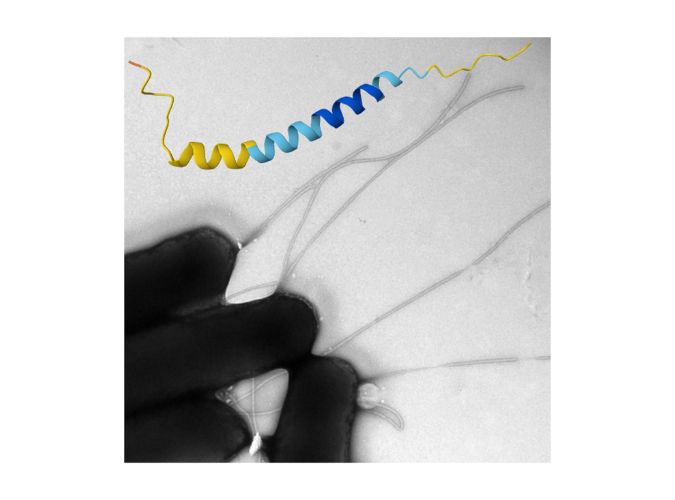
AlphaFold structure of the Salmonella small protein YjiS and electron microscopy visualization of flagella of a yjiS deletion mutant.


Small DUF1127 proteins regulate bacterial phosphate metabolism through protein-protein interactions with the sensor kinase PhoR

Donata C L E Remme and others

microLife, Volume 6, 2025, uqaf023, https://doi.org/10.1093/femsml/uqaf023

Conserved small proteins modulate bacterial phosphate homeostasis by interacting with the sensor kinase PhoR of the phosphate uptake system.

One transcript, two functions: the emerging roles of dual-function RNAs

Liz Maria Luke and Kai Papenfort

microLife, Volume 6, 2025, uqaf034, https://doi.org/10.1093/femsml/uqaf034

In this review, we discuss the diverse regulatory and physiological roles of dual-function RNAs in bacteria.

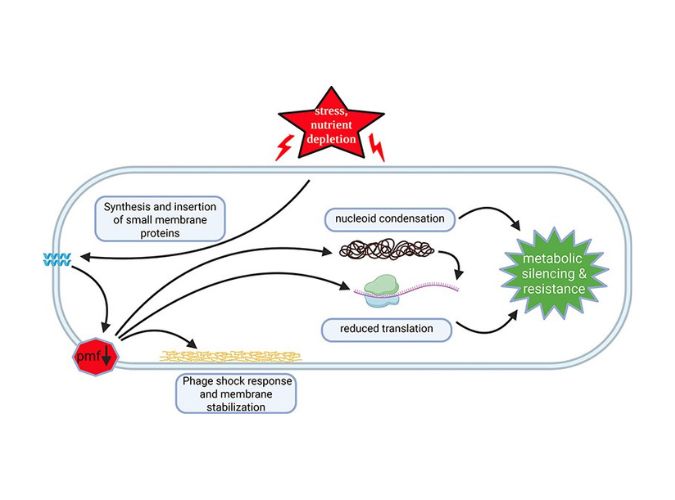
The small bacterial membrane protein YohP induces nucleoid condensation in E. coli and inhibits oligomerization of antimicrobial peptides

Ana Natriashvili and others

microLife, Volume 6, 2025, uqaf030, https://doi.org/10.1093/femsml/uqaf030

The synthesis of small membrane proteins protects bacterial cells by reducing their metabolic activity.

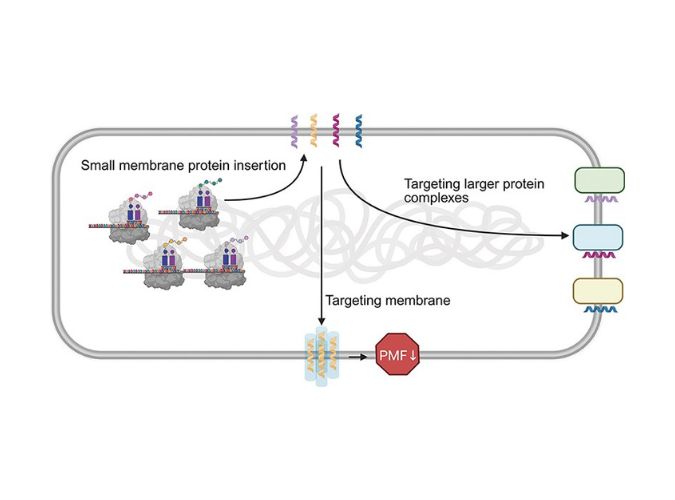
Functional Diversity and Molecular Interactions of Small Membrane Proteins in Bacteria

Jing Yuan and others

microLife, Volume 6, 2025, uqaf035, https://doi.org/10.1093/femsml/uqaf035

Membrane insertion and functional diversity of bacterial small membrane proteins.

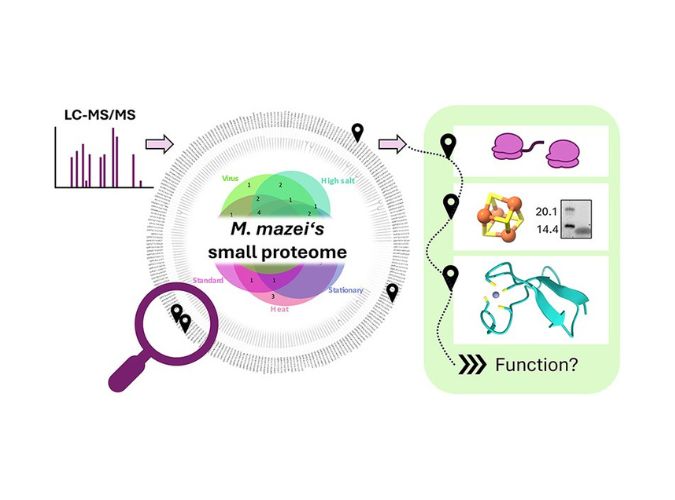
Guided tour through the small protein landscape of Methanosarcina mazei using proteomics and biochemical approaches

Eva Herdering and others

microLife, Volume 6, 2025, uqaf038, https://doi.org/10.1093/femsml/uqaf038

M. mazei proteomics detects 234 small proteins across different growth conditions, including small ribosomal proteins, ferredoxins with Fe-S cluster motifs and validated zinc-binding proteins.

CoMPaseD: advanced planning of proteomic experiments aiming to identify small proteins

Jürgen Bartel and others

microLife, Volume 7, 2026, uqaf043, https://doi.org/10.1093/femsml/uqaf043

Description/description

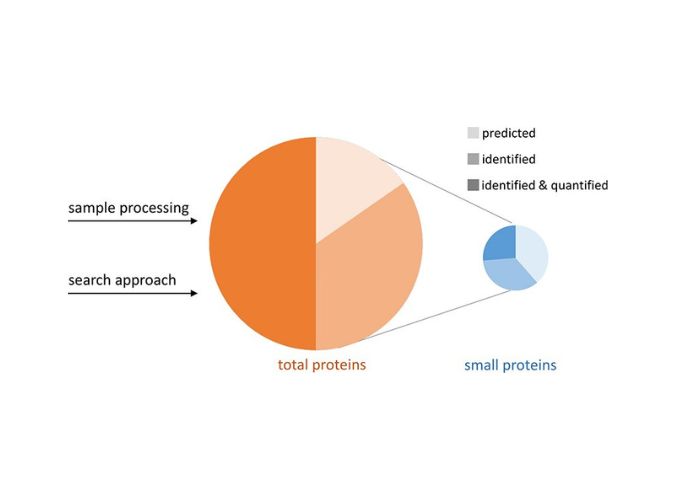
Less missing values: evaluation of proteomics workflows for the quantification of small proteins

Jürgen Bartel and others

microLife, Volume 7, 2026, uqag002, https://doi.org/10.1093/femsml/uqag002

This study systematically evaluates methods for improving the identification and quantification of small proteins using bottom-up mass spectrometry, providing a comprehensive dataset of proteins from Clostridioides difficile.

Impact of SliP4 deletion on the high-light acclimation in Synechocystis sp. PCC 6803

Luna Alvarenga-Lucius and others

microLife, Volume 7, 2026, uqag003, https://doi.org/10.1093/femsml/uqag003

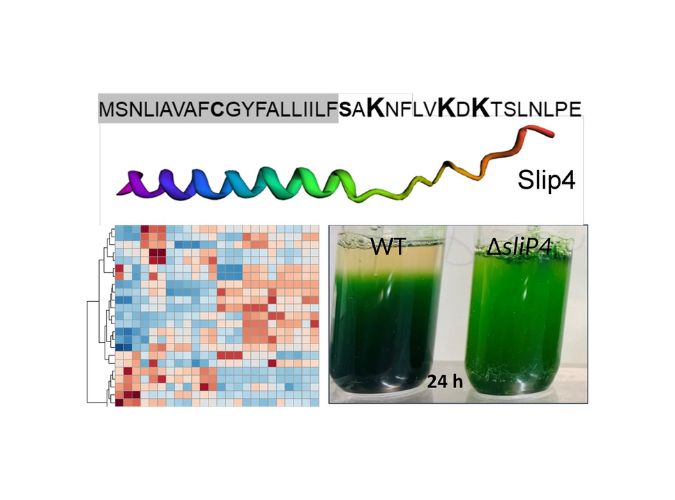
The lack of the small high-light-induced protein SliP4 has a marked impact on the acclimation response of Synechocystis sp. PCC 6803 to high light.

Proteome characterization of single gene deletion mutants lacking zinc finger µ-proteins in Haloferax volcanii

Pedro H C Franco and others

microLife, Volume 7, 2026, uqag005, https://doi.org/10.1093/femsml/uqag005

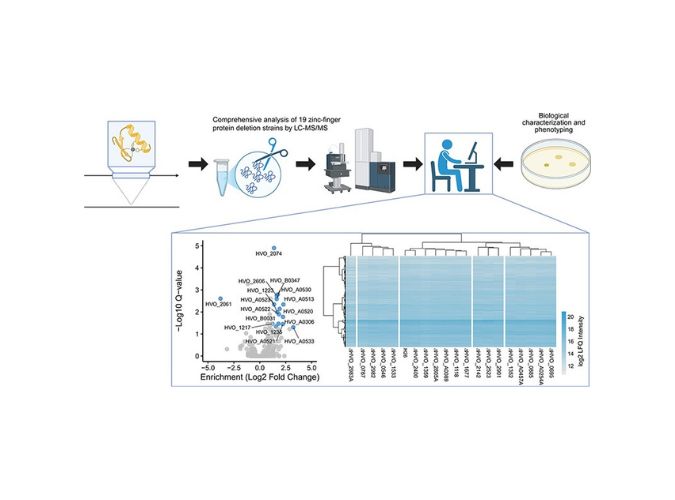
Proteomics analysis of multiple zinc-finger µ-protein deletion strains suggests their role in the regulation of cell motility, biofilm formation, and additional biological processes.

FEMS Journals and open access

Embracing an open future

Open access is key to supporting the FEMS mission of disseminating high quality research as widely as possible: when high quality, peer reviewed sound science is open access, anyone, anywhere in the world with an internet connection, can read it. All but one of the not-for-profit FEMS journals are fully open access (OA), with one journal, FEMS Microbiology Letters, offering free-to-publish and OA options.

Learn more
Publish with purpose
FEMS Journals