
FEMS Yeast Research
A trusted journal for advancing yeast biology, from fundamental mechanisms to biotechnological applications
FEMS Yeast Research brings together the global community of researchers working across the full spectrum of fundamental and applied yeast biology. Led by experts deeply embedded in the field, it offers a trustworthy space for sharing discoveries that drive both scientific progress and industrial applications of yeast. With its strong disciplinary focus and active community leadership, FEMS Yeast Research enables scientists to connect with peers, gain visibility for their work, and engage in conversations that support yeast researchers and yeast research worldwide.
Editor-in-Chief: Prof. John Morrissey, University College Cork
Highlights: Covering the spectrum of yeast science | Community-led, run by researchers for researchers | Retrospectives: historical accounts of key individuals & discoveries | Format free submission


- Why choose FEMS Yeast Research ?
- Is your research the right fit?
- Recent highlights
- Quick facts
- Meet the editorial leadership
- Publish with purpose. Publish with FEMS
Why choose FEMS Yeast Research?
✅ Specialist home for yeast-focused research
FEMS Yeast Research is dedicated exclusively to yeast, meaning your work is read by a focused, engaged community that understands its significance
✅ Focus on impactful science
The journal prioritises studies that deepen biological understanding, placing your manuscript in the company of rigorous, field-advancing research
✅ Community-led, run by researchers for researchers
Our topic-based editorial structure brings together active researchers with deep subject expertise, supporting rigorous, fair and constructive peer review across the breadth of yeast science.
Is your research the right fit?
Well-suited for articles that:
- Advance biological understanding of yeast systems, function, or impact
- Demonstrate clear relevance and significance to the yeast field
- Deliver mechanistic insight that advance knowledge of any cellular process in laboratory, wild, industrial, or pathogenic species of yeast
- Provide meaningful ecological, evolutionary, or functional insight at the population or systems level
- Introduce novel methods, tools, genetics, or synthetic biology approaches for studying or engineering yeast
- Develop biotechnical applications for yeast in the food, feed, chemical, health, materials, biofuels, or other sectors
- Use yeast to uncover broader biological or disease relevant mechanisms
- Study any yeast species, provided the work contributes meaningfully to the field
Protocols, tools, and methods
Developing and applying innovative tools, assays, and synthetic biology approaches to advance yeast research.
Genetics, cell biology, and metabolism
Uncovering the genetic, molecular, and metabolic mechanisms that govern yeast function and regulation.
Sensing, signaling, and physiology
Exploring how yeasts detect, respond to, and adapt to their internal and external environment.
Population genomics and ecology
Investigating yeast diversity, evolution, and interactions across populations and ecosystems.
Industrial and environmental biotechnology
Engineering yeasts for biomanufacturing, advanced and precision fermentation, and sustainable biotechnological applications.
Food and beverages
Advancing understanding and innovation in yeast-driven fermentation, nutrition, and food & feed systems.
Pathogenic yeasts
Deciphering the biology, pathogenesis, and drug resistance mechanisms of clinically relevant yeasts.
Yeast as a model for biology and disease
Using yeast to reveal fundamental biological principles and mechanisms underlying human disease.
Still unsure? Get in touch to discuss your manuscript’s suitability before submission at info@fems-microbiology.org.
Recent highlights
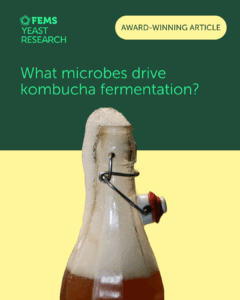
Saad et al. analyses 23 starters from different origins to reveal a surprisingly consistent microbial core and shows how these microbes are distributed between liquid and biofilm phases during fermentation.
Retrospective:
Crossing paths and avoiding catastrophe – an outsider’s inside view of yeast genetics
Hartl traces the evolution of yeast genetics, highlighting its foundational figures, landmark discoveries, and the interdisciplinary collaborations that shaped the field.
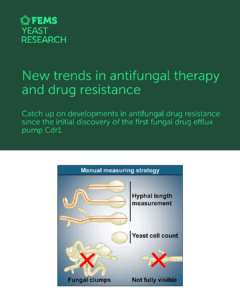
Collection showcasing the exciting developments in our understanding of antifungal drug resistance since the initial discovery of the first fungal drug efflux pump Cdr1.
Quick facts
- Publishing Model: Open access
- Article Types: : Research Articles, MiniReviews, Protocols, Editorials, Perspectives, Commentaries, Retrospectives, Letters to the Editor
- Review Process: Single-anonymised peer review.
Once a submitted manuscript passes initial assessment by the Journal’s Editor-in-Chief, it will then be passed to a handling editor to undergo peer review before making the final decision. During the peer review phase, your manuscript is typically sent to two reviewers, at least one of whom will be a member of the journal editorial board. - Transfer options: To help authors avoid unnecessary delays and resubmissions, authors with manuscripts that demonstrate scientific robustness but are not the best fit for the journal’s scope may be offered the option to transfer seamlessly to FEMS Microbes. Please note, transfer does not imply acceptance, and the manuscript will be subject to editorial evaluation and peer review.
Meet the editorial leadership
Editor-in-Chief Prof. John Morrissey on his favorite microbe.
Editorial board members, Francisco Cubillos and Paola Branduardi on Society Publishing
Publish with purpose. Publish with FEMS.
The FEMS journal portfolio spans the full spectrum of microbiology, publishing rigorous, society-backed research from fundamental discovery to real-world application.
Stay updated on interesting reads, publishing opportunities, and more by signing up for the FEMS newsletter.

Open access is key to supporting the FEMS mission of disseminating high quality research as widely as possible: when high quality, peer reviewed sound science is open access, anyone, anywhere in the world with an internet connection, can read it. All but one of the not-for-profit FEMS journals are fully open access (OA), with one journal, FEMS Microbiology Letters, offering free-to-publish and OA options.