



Indonesia is an agrarian country. Yet this simple label does not capture its complexity. From rice terraces in Java to cassava cultivation in eastern regions, spread across thousands of islands, agriculture shapes culture and ecosystems. But transforming these raw materials into food is what truly defines Indonesian culture, with fermented foods representing one of the most distinctive culinary traditions. The study “Traditional fermented foods of Indonesia harbour functionally redundant but phylogenetically diverse taxa” in the Thematic Issue “Indigenous Microbiology” in FEMS Microbes explored the highly dynamic and diverse microbial landscape of this underexplored aspect of the Indonesian cuisine, as highlighted by Wisnu Wicaksono. #FascinatingMicrobes
Indonesia and its unique cuisine
Each region in Indonesia carries its own culinary tradition, rooted in local knowledge and shaped by generations of practice. Products such as tape ketan, tape singkong, and terasi are widely consumed and culturally significant. Yet they are often produced through small-scale, artisanal methods relying on natural microbial communities.
The study “Traditional fermented foods of Indonesia harbour functionally redundant but phylogenetically diverse taxa” in FEMS Microbes examined the microbial diversity and functional potential of traditional Indonesian fermented foods, focusing on tape ketan, tape singkong, and terasi. Food samples were collected from West Java, DKI Jakarta, East Java, Central Java, West Nusa Tenggara, and Bali, representing diverse geographic and cultural backgrounds.
Using high-throughput sequencing approaches, they characterized both bacterial and fungal communities in detail and revealed an extraordinary level of microbial diversity. Individual samples contained high bacterial diversity, with microbial communities varying depending on the type of raw material used.
The microbial diversity of Indonesian fermented foods
Across all samples, Lactobacillales and Bacillales were predominant. In plant-based fermentation products such as tape ketan and tape singkong, lactic acid bacteria, particularly Lactobacillus, Leuconostoc, and Weissella, dominated. In contrast, the animal-based product terasi showed higher diversity and was enriched in halotolerant Bacillales genera such as Virgibacillus and Lentibacillus.
Interestingly, the plant-based fermentation products tape ketan and tape singkong exhibited significantly higher microbial abundance, but lower richness and diversity compared to the animal fermentation product terasi. Tape ketan and tape singkong contained high amounts of bacteria, up to 10⁷ 16S rRNA gene copies g⁻¹, as well as fungi.
On the other hand, terasi had substantially lower total microbial abundance, but significantly higher bacterial richness. This indicates the presence of more complex but less abundant microbial communities.
The researchers further examined the functional capabilities of these communities. They found genes associated with the production of bacteriocins, short-chain fatty acids, and vitamins. These significant functions point to potential health benefits and promising applications in functional food development, serving as a reservoir of beneficial microbial traits. Despite substantial differences in microbial composition, many communities perform similar biochemical functions.
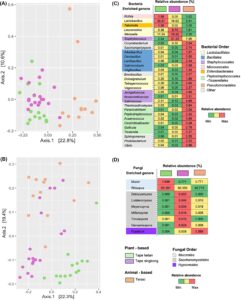
For instance, the lactic acid bacteria (Lactobacillales) dominating tape ketan and tape singkong consistently contained the acetate production genes ack and pta. Interestingly, the Firmicutes Staphylococcales and Bacillales identified in terasi encoded the same genes, highlighting that distinct taxa can perform similar functions.
As such, Indonesian fermented foods represent an important but untapped resource for microbiome research. Further studies could lead to the discovery of new probiotic strains and functional compounds. Overall, the study brings attention to a rich and complex microbial world embedded within everyday foods.
Indonesian fermented products are not only expressions of cultural heritage but also dynamic ecosystems with significant functional potential. As interest in sustainable foods and gut health continues to grow, better understanding these underrepresented food products is essential for their application.
- Read the article “Traditional fermented foods of Indonesia harbour functionally redundant but phylogenetically diverse taxa” in the Thematic Issue “ Indigenous Microbiology” by Wicaksono et al. in FEMS Microbes (2026).
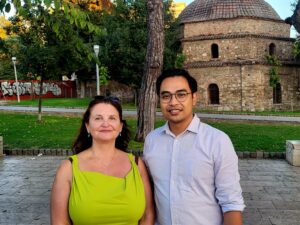
Wisnu Adi Wicaksono is a microbiologist specializing in microbial ecology, with a focus on microbiomes in food, soil, and host-associated systems. His research explores functional diversity, antimicrobial resistance, and the application of microbiomes for sustainable agriculture and health.
Gabriele Berg is a leading microbiologist and professor known for her work on plant microbiomes, environmental microbiology, and the One Health concept. Her research has significantly advanced understanding of microbial interactions across plants, humans, and ecosystems. Together, their work contributes to linking microbiome science with applications in food systems, agriculture, and health.
About this blog section
The section #FascinatingMicrobes for the #FEMSmicroBlog explains the science behind a paper and highlights the significance and broader context of a recent finding. One of the main goals is to share the fascinating spectrum of microbes across all fields of microbiology.
| Do you want to be a guest contributor? |
| The #FEMSmicroBlog welcomes external bloggers, writers and SciComm enthusiasts. Get in touch if you want to share your idea for a blog entry with us! |