


When people think about wine, they usually picture vineyards, grape varieties, terroir, and the craft of the winemaker. Yet every bottle also depends on a quieter partner: yeast. These microscopic fungi turn grape sugars into alcohol. Beyond driving fermentation, they also shape the aromas, flavours, texture and reliability that make one wine distinct from another. The minireview “Uncorking wine yeast genomics from grape to glass” in FEMS Yeast Research, part of the Thematic Issue “Saccharomyces cerevisiae – Life with 6000 genes“, explores how genomics has transformed this invisible but delicious world, as highlighted by Sakkie Pretorious for this #FEMSmicroBlog. #MicrobiologyIsEverywhere
Saccharomyces cerevisiae – Life with 6000 genes
Thirty years ago, scientists completed the first genome sequence of a eukaryote: a reference strain of the yeast Saccharomyces cerevisiae. That achievement opened a new era in biology. It gave researchers a blueprint of roughly 6,000 genes and made yeast one of the most powerful model organisms for understanding how living cells work.
For wine yeast research, the impact has been profound. We now know, thanks to this sequencing project, that wine yeasts are not interchangeable workhorses.
Each strain carries genetic differences that influence how quickly it ferments grape sugars and which flavour and aroma compounds it produces. Plus, a strain’s genome determines how it copes with the alcohol produced, heat, low nitrogen, sulfites as well as other stresses during the fermentation process.
Some strains enhance fruity or floral notes; others improve robustness under difficult cellar conditions. This way, genomics is helping winemakers move from trial-and-error strain selection toward more informed, predictable choices.
Integrating the Saccharomyces environment
The picture is also richer than Saccharomyces alone. Grapes already contain diverse communities of yeasts and other microorganisms that travel together with them from vineyard to cellar.
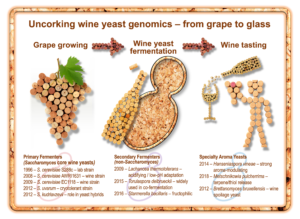
Non-Saccharomyces yeasts can contribute freshness, acidity, mouthfeel and complexity, while spoilage yeasts such as Brettanomyces can produce undesirable off-flavours. Understanding these microbial communities at the genomic level is opening the way to precision oenology: deliberately selecting and combining naturally occurring microbes to achieve reliable fermentation and desired sensory outcomes.
This is increasingly important in a changing climate. Along with many other factors, warmer seasons can make fermentation unpredictable, as they can alter grape sugar, acidity, and nutrient balance.
For example, a hot spell during the ripening season can change the ratio between the main sugars, glucose and fructose, in the grape juice. As Saccharomyces cerevisiae is glucophilic, it struggles to import fructose, even when fructose concentration is high, leading to sluggish fermentation. The resulting wine is often considered ‘low quality’ by consumers due to its higher residual sugar content.
Genomics gives researchers and winemakers tools to identify yeasts that are naturally better suited to such changing conditions. For example, some yeast strains are more capable of releasing tropical fruit flavours from certain grapes. Thus, relying on improved wine yeast strains suited to specific grape varieties can give a winemaker an edge during fermentation.
Advancing yeast genomics
The next frontier is even more ambitious. Advances in synthetic biology, pan-genomics, machine learning and artificial intelligence are connecting genetic information with fermentation performance.
The international Sc2.0 project aims to build the first fully synthetic yeast genome and shows how far the field has progressed: from reading yeast genomes to testing how genomes can be redesigned. The idea is that a final Sc2.0 yeast strain, containing 16 computer-designed and chemically made chromosomes, will serve as a lab and reference strain to answer fundamental biological questions.
And the lessons extend beyond wine. Yeast is central to biotechnology, food production, medicine, agriculture, renewable chemicals and sustainable manufacturing. What we learn from wine yeast genomics can therefore inform broader efforts to build more resilient biological systems for industrial purposes. The humble yeast cell may be small, but its contribution to a more sustainable and flavourful future is anything but.
- Read the minireview “Uncorking wine yeast genomics from grape to glass”, in the Thematic Issue “Saccharomyces cerevisiae – Life with 6000 genes“, by Kutyna et al. in FEMS Yeast Research (2026).
About this blog section
The section #MicrobiologyIsEverywhere highlights the global relevance of microbiology. The section acknowledges that microbiology knows no borders, as well as the fact that microbiologists are everywhere and our FEMS network extends well beyond Europe. This blog entry type accepts contributions from excellent blogs translated into English. Regional stories with global relevance are welcomed. National or international events sponsored, organised or connected to FEMS are also covered.
| Do you want to be a guest contributor? |
| The #FEMSmicroBlog welcomes external bloggers, writers and SciComm enthusiasts. Get in touch if you want to share your idea for a blog entry with us! |